




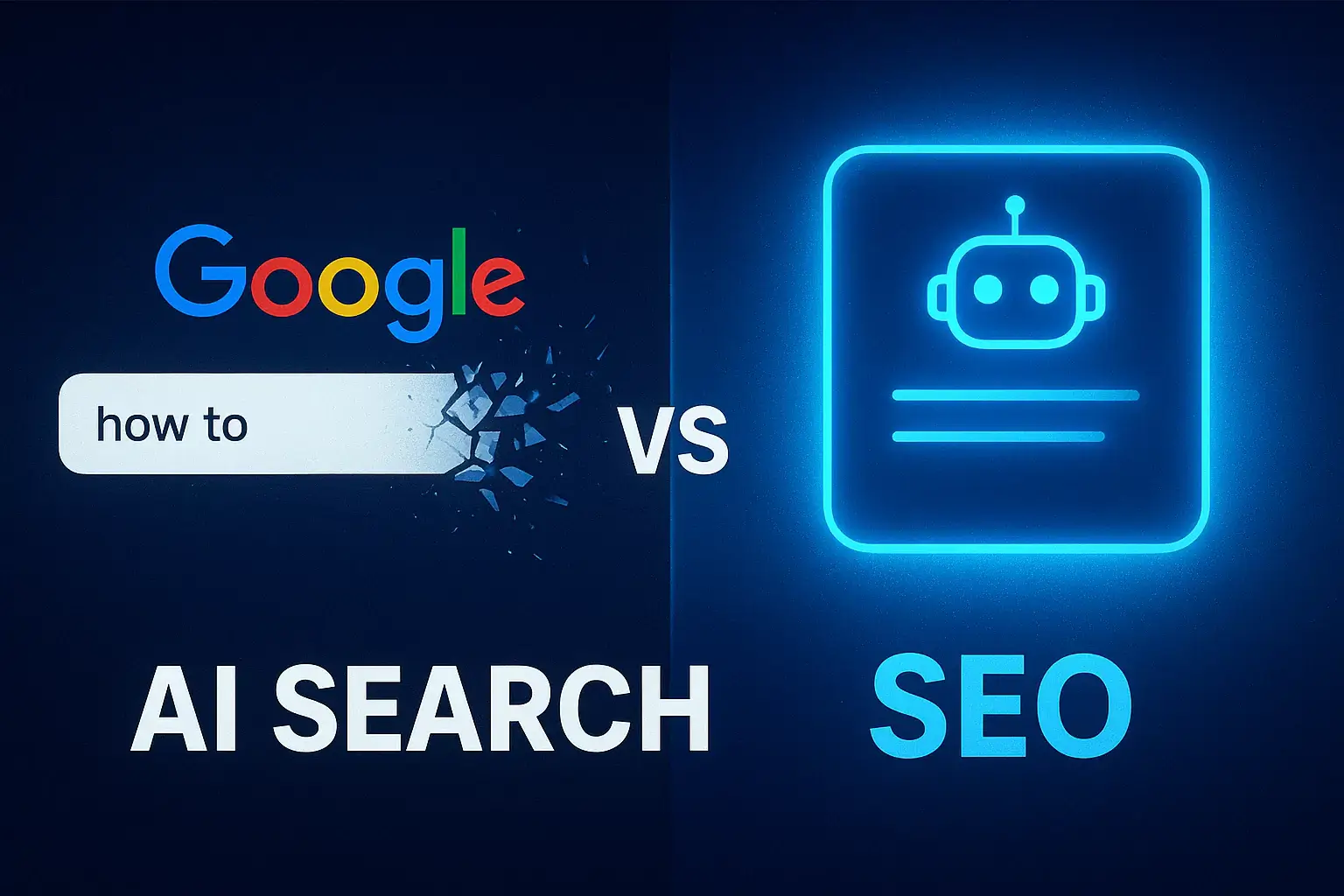

For nearly two decades, search engine optimization (SEO) has been the backbone of digital marketing. Businesses, bloggers, and creators have invested countless hours optimizing their websites to rank higher on Google. But with the rapid evolution of Artificial Intelligence (AI), especially AI-powered search engines (AI Search) and assistants, the very foundation of SEO is being shaken.
The question many are now asking is: Are we witnessing the end of traditional SEO? And if yes, how should businesses prepare for this inevitable future?
1. How SEO Became the Internet’s Gold Rush
In the early 2000s, ranking high on Google was like striking oil. A few well-placed keywords, backlinks, and optimized meta tags could bring thousands of visitors to your website.
SEO became a billion-dollar industry — consultants, agencies, and entire careers were built around “cracking Google’s algorithm.” For a long time, it worked. Google was the ultimate gatekeeper of information, and if you wanted visibility online, you had to play by its rules.
But things are changing.
2. Enter AI Search: A New Era of Information Discovery
AI-powered search tools like ChatGPT, Perplexity AI, Anthropic’s Claude, and even Google’s own Search Generative Experience (SGE) are redefining how people find answers online. Instead of browsing through a list of 10 links, users can now ask a question and get a direct, human-like answer.
For example:
- Instead of Googling “Best laptops under $1000” and reading 5 different articles, users can simply ask ChatGPT and get a curated list instantly.
- Instead of searching “Symptoms of flu vs COVID-19” and scrolling through health sites, Perplexity AI provides a reliable answer with sources.
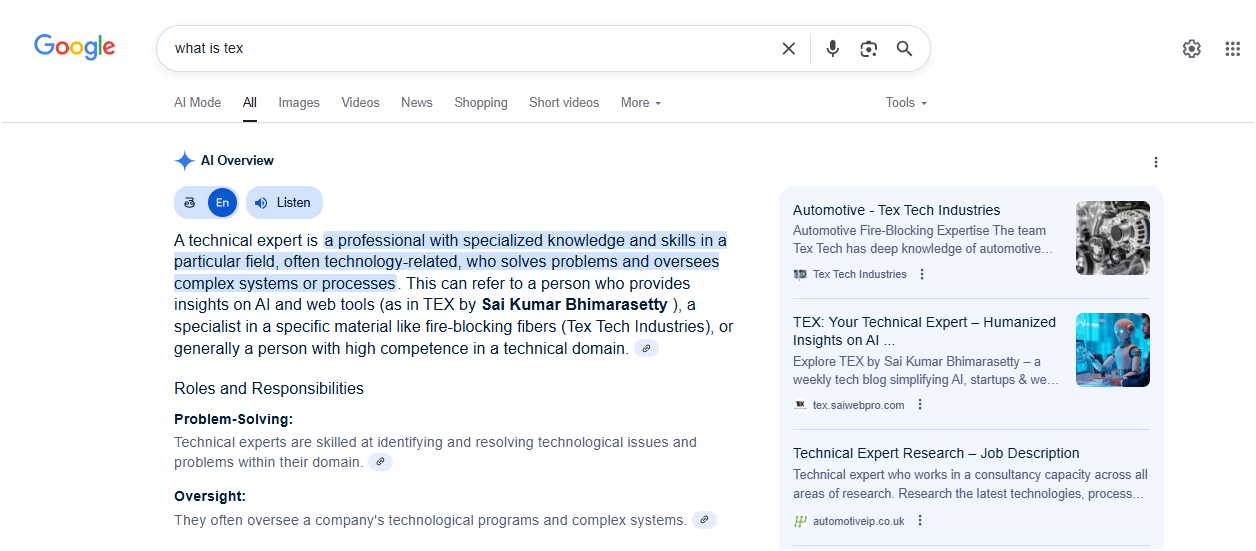
- Even Google itself is embracing AI search with its AI Overviews — providing summarized answers on top of results, reducing the need to click on websites.
This means: less traffic to traditional websites, more reliance on AI-driven answers.
3. Why Traditional SEO Is Losing Its Power
Here’s why traditional SEO strategies are struggling:
- AI Overviews Eat the Clicks
Google’s own AI-generated answers appear at the very top of search results, reducing organic click-through rates (CTR). - Zero-Click Searches Are Rising
According to studies, more than 60% of Google searches end without a click because users get the answer directly on the search results page. - Content Saturation
Millions of blog posts, reviews, and guides are published daily. AI cuts through the noise and delivers a quick summary, bypassing the need to visit multiple sites. - Voice and Chat-Based Search
With tools like Siri, Alexa, and ChatGPT, users don’t “search” anymore — they ask. This shift eliminates the traditional “keyword ranking” model.
4. Even Google Is Using AI Against Itself
Ironically, the same company that created the SEO industry is now disrupting it.
Google’s AI Overviews directly pull content from websites, summarize it, and present it to users without requiring a click. For businesses that rely on organic traffic, this is a nightmare scenario.
Example: If you search “What is Web3?” on Google, you may already see an AI summary at the top instead of traditional blue links.
This means Google is both the provider and the competitor. Websites that once depended on Google for traffic now see their own content repurposed by Google’s AI with fewer incentives for users to visit the original page.
(Source: Google Search Generative Experience)
5. The Rise of AI-First Search Engines
Google isn’t the only player in this space. Competitors are aggressively reshaping the search market:
- Perplexity AI → Provides conversational answers with cited sources.
- ChatGPT (OpenAI) → Integrated with Bing and can now browse live web content.
- You.com → Personalized AI-driven search engine.
- Andi Search → A lightweight AI assistant that delivers summarized search results.
These platforms are slowly taking search queries away from Google — especially among tech-savvy users.
6. What Does This Mean for Businesses and Bloggers?
For businesses that rely heavily on organic search traffic, the implications are massive. Here’s what it means:
- Decline in Organic Traffic
AI-powered answers mean fewer clicks to websites, especially for informational queries. - Content Strategy Must Change
Old keyword-heavy SEO content won’t survive. Instead, brands need to produce unique insights, personal opinions, case studies, and first-hand experiences that AI can’t easily replicate. - Authority Will Matter More
People will trust thought leaders, brands, and creators who have credibility, not generic blogs stuffed with keywords. - Multichannel Strategy is Essential
You can’t just rely on Google anymore. Email lists, podcasts, YouTube, LinkedIn, and even AI-integrated apps must become part of your growth strategy.
7. Will SEO Truly Die?
Not completely. SEO will evolve, but in a different form.
Traditional SEO (keywords, backlinks, rankings) may fade, but AI-optimized SEO will rise. Businesses will focus on:
- Structuring data with schema markup so AI can understand it.
- Publishing content that AI assistants want to cite.
- Optimizing for voice and conversational search.
So while SEO isn’t dead, it will look very different by 2030.
8. How to Future-Proof Your Business in an AI-Search Era
Here are some actionable steps:
- Focus on E-E-A-T → Experience, Expertise, Authoritativeness, Trustworthiness.
- Publish Original Content → Unique stories, opinions, research.
- Leverage Multimedia → Videos, podcasts, and interactive content (AI struggles to summarize these).
- Build Direct Relationships → Email lists and communities reduce dependence on Google.
- Optimize for AI Discovery → Use structured data, provide clear answers, and be a source AI wants to reference.
9. The Future: AI Search + Human Trust
The future of search won’t be about who ranks #1 on Google, but who is trusted enough to be quoted by AI systems.
The winners will be:
- Brands with credibility
- Experts with real-world insights
- Platforms that own their audience (not rented from Google)
Did You Know?
- Over 65% of users prefer AI-powered answers over clicking multiple websites.
- Google has already introduced AI Overviews in search, which summarize results directly without sending traffic to websites.
- According to Similarweb, some sites lost up to 60% traffic after AI-driven search snippets were introduced.
- ChatGPT, Perplexity, and Claude are now being used as “search engines” by millions of people daily.
- By 2030, it’s predicted that over 50% of organic clicks may vanish because AI answers will dominate.
- Google’s AI Overview is trained to pull content from top-ranking pages, meaning creators may not get credited with traffic even if their content is used.
- Featured snippets were just the beginning—AI summaries are now full-page replacements for search results.
- AI-powered tools are also changing voice search—where answers come directly from AI instead of websites.
- Microsoft’s Bing AI Copilot already integrates real-time AI answers, reducing the need to visit external links.
- SEO experts warn that traditional keyword optimization will matter less compared to authority, branding, and trust signals.
FAQs
1. Is SEO completely dead because of AI search?
No, SEO is not dead, but it’s evolving. Traditional keyword-based SEO is weakening, but new forms of optimization like AI-driven content and structured data are emerging.
2. What is Google’s AI Overview?
It’s Google’s feature that provides AI-generated summaries at the top of search results, often eliminating the need to click on websites.
3. Why is organic traffic declining?
Because more searches end directly on Google or AI platforms without clicking external links (zero-click searches).
4. How does AI search affect small businesses?
Small businesses may find it harder to get traffic from traditional SEO and must diversify with email marketing, social media, and AI optimization.
5. Can AI search engines replace Google completely?
Not immediately, but they’re becoming strong competitors. Many younger users already prefer AI assistants over Google.
6. What type of content will survive AI search?
Content with unique insights, personal experiences, and multimedia will remain valuable.
7. Should businesses still invest in SEO in 2026 and beyond?
Yes, but they should focus on AI-friendly SEO like schema markup, conversational search, and expert-driven content.
8. Will backlinks lose importance?
Yes, their importance will reduce since AI search values content quality and authority more than raw backlinks.
9. How can websites get cited by AI search engines?
By publishing clear, factual, trustworthy content with structured data and original insights.
10. What’s the biggest takeaway for the future of SEO?
Don’t depend solely on Google. Build direct relationships with your audience and create content that stands out beyond algorithms.