





Introduction
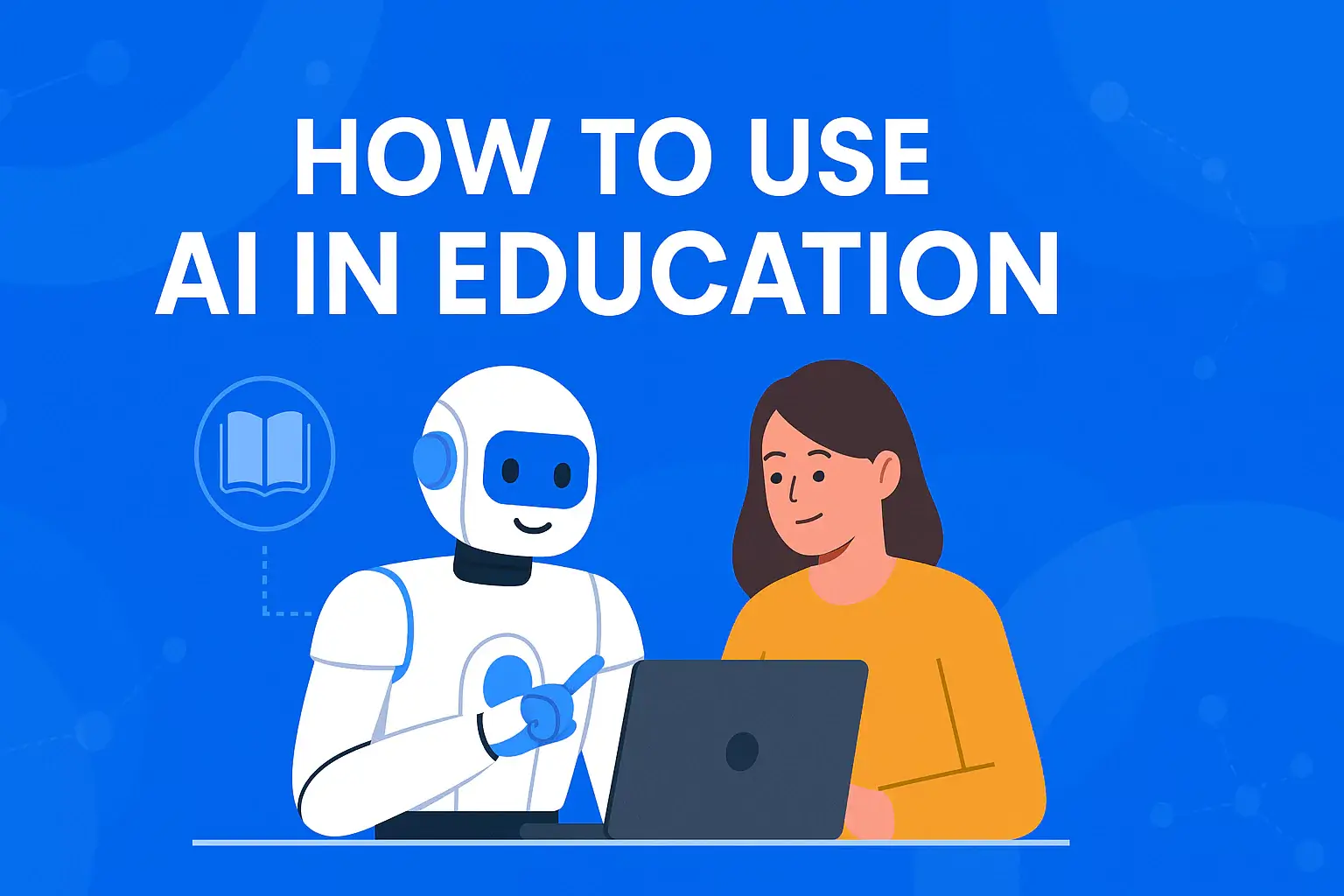
Artificial Intelligence (AI) is no longer a futuristic dream—it’s already transforming classrooms, online learning, and self-study habits. If you’re wondering how to use AI in education and learning, the answer is simple: AI helps personalize study paths, automate repetitive tasks, and make learning more engaging.
Whether you’re a student, teacher, or lifelong learner, AI can be your digital assistant, tutor, and motivator all at once. Let’s explore how.
Why AI Matters in Education
AI is revolutionizing education by:
- Personalizing lessons based on student performance.
- Automating grading and administrative tasks.
- Breaking language barriers through real-time translation.
- Supporting accessibility with AI-powered tools for visually or hearing-impaired students.
Real-Life Examples of AI in Learning
Here are some ways AI is already in action:
- Duolingo uses AI to adapt lessons in real-time.
- Khan Academy’s Khanmigo (AI tutor) helps students solve problems step by step.
- Google Classroom + AI add-ons simplify assignments and grading.
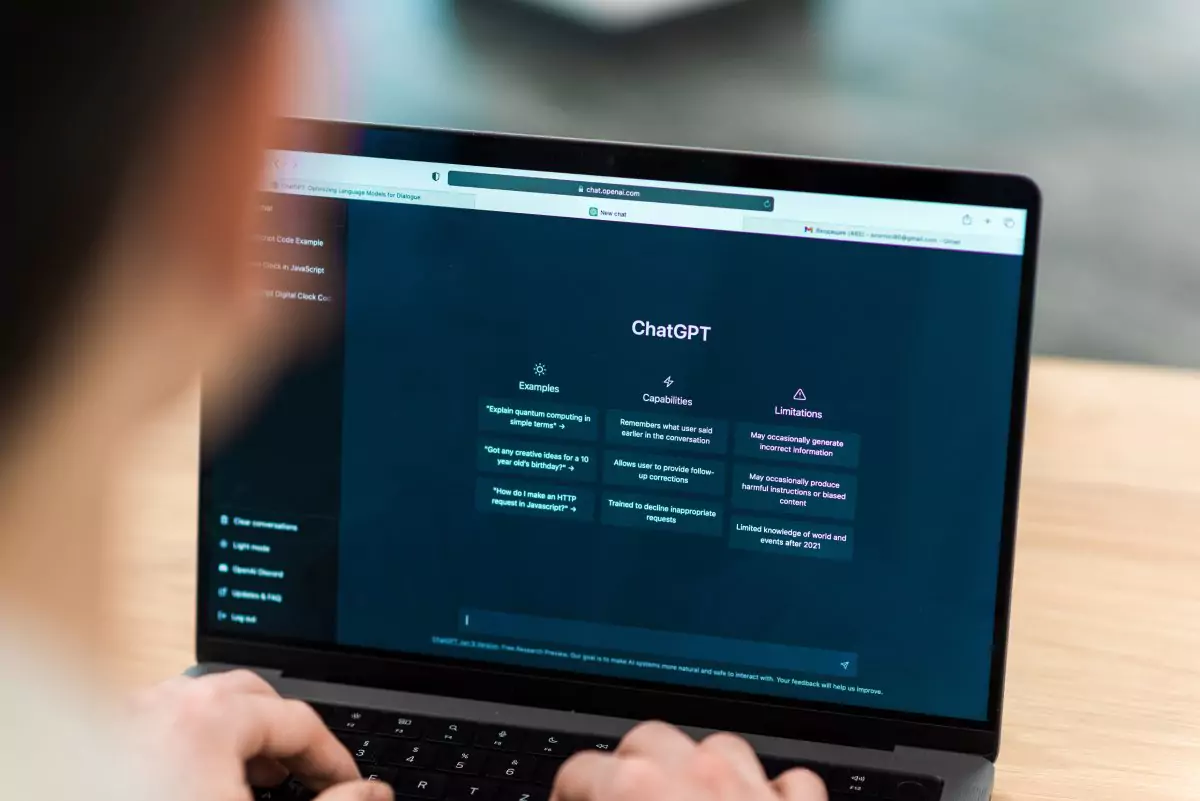
- ChatGPT-powered tutors answer questions instantly and provide study summaries.
Best AI Tools for Students & Teachers
| AI Tool | Best For | How It Helps |
|---|---|---|
| ChatGPT | Homework help & brainstorming | Generates explanations, essays, and summaries |
| Grammarly | Writing & proofreading | AI-powered grammar & tone correction |
| Quizlet AI | Test preparation | Creates flashcards & practice quizzes |
| Scribe AI | Teachers & trainers | Automates lesson notes & workflows |
| Otter.ai | Students in lectures | Converts spoken words into accurate notes |
Benefits of AI in Education
- Personalized learning paths for every student.
- Time-saving automation for teachers.
- Equal opportunities for learners with disabilities.
- Instant feedback for continuous improvement.
- Access to knowledge 24/7 via AI tutors.
Challenges and Limitations
- Over-dependence on AI can reduce critical thinking.
- Data privacy and student safety concerns.
- Not all schools can afford AI-powered solutions.
- Teachers still play a vital role—AI cannot replace human empathy.
Future of AI in Learning
By 2030, we may see:
- AI-powered virtual classrooms with holographic teachers.
- Emotion-detecting AI that adapts lessons to student moods.
- Fully gamified learning experiences powered by AI.
AI won’t replace teachers—it will empower them to focus on creativity, mentoring, and problem-solving.
Conclusion
Now you know how to use AI in education and learning—from AI tutors like ChatGPT to classroom tools like Google AI integrations. The future of learning will be personalized, accessible, and more exciting than ever.
👉 If you’re an educator or student, start experimenting with free AI tools today. Small steps now can future-proof your learning journey.
FAQs
1. What are the benefits of using AI in education?
AI helps personalize learning, save teachers time through automation, and provide data-driven insights that improve student outcomes.
2. Can AI replace teachers in the classroom?
No, AI cannot replace teachers. Instead, it acts as a supportive tool that assists educators in lesson planning, grading, and engaging students.
3. What are examples of AI tools for learning?
Examples include ChatGPT, Duolingo AI, Grammarly, Khan Academy’s AI tutor, and adaptive learning platforms like Coursera or EdX.
4. Is AI safe for students to use?
AI is safe when used under proper guidance. However, schools must ensure ethical use, protect student data, and avoid over-reliance.
5. How will AI shape the future of education?
AI will make education more personalized, accessible, and global by breaking language barriers and offering intelligent virtual tutors.
6. How can teachers use AI effectively?
Teachers can use AI to automate grading, create interactive content, track student progress, and provide instant feedback.
7. Is AI affordable for schools and learners?
Yes, many AI tools are free or low-cost. However, advanced platforms may require investment, making budget planning important.
8. Can AI support students with disabilities?
Absolutely. AI-powered speech recognition, text-to-speech, and adaptive tools make learning more inclusive for differently-abled students.
9. What are the risks of AI in education?
Key risks include data privacy concerns, reduced human interaction, and potential misuse if students rely too much on AI.
10. How can students use AI responsibly in learning?
Students should use AI as a guide, not a shortcut. They must verify information, avoid plagiarism, and combine AI with critical thinking.
References
- AI Productivity Tools
According to our guide on AI for Personal Productivity in 2025, students and teachers can save hours each week by automating repetitive tasks such as note-taking and scheduling.
- Affordable AI Solutions
Budget is often a concern for schools, but as we explained in How Startups Can Use AI Without a Big Budget, many affordable AI platforms exist that can be adapted for education.
- Digital Mindset for Educators & Learners
The success of AI in classrooms depends on both teachers and students developing a digital mindset, ensuring they embrace technology rather than resist it.