




Technology is everywhere. From ordering groceries online to remote work tools, the digital revolution has transformed how we live and work. But succeeding in this new era isn’t about simply using technology—it’s about adopting a digital mindset.
In this guide, we’ll explore what a digital mindset means, why it matters, and how you can develop one to stay future-ready.
What is a Digital Mindset?
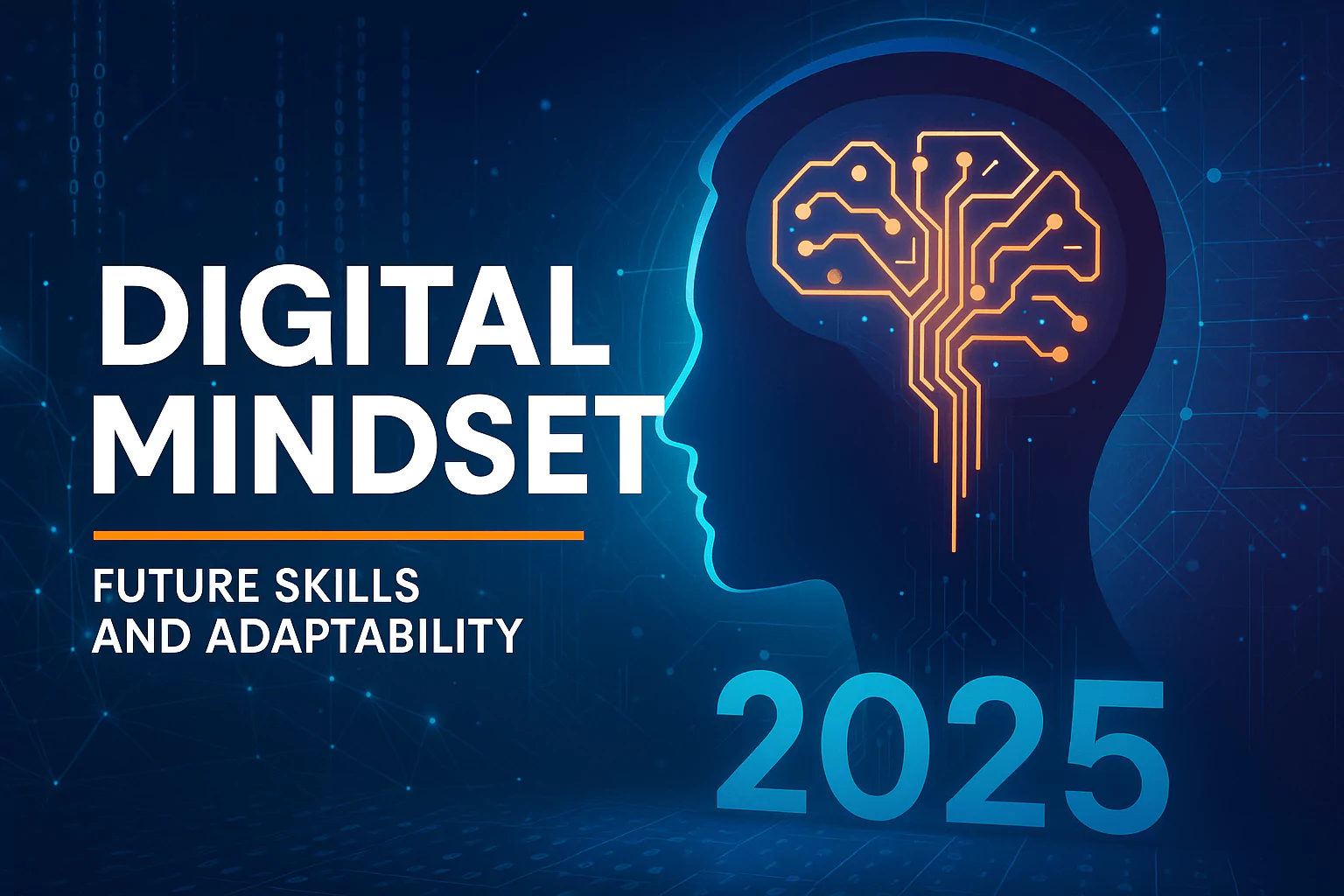
A digital mindset is more than learning a few apps or coding skills. It’s a way of thinking that embraces change, technology, and innovation as part of everyday life.
It includes:
- Openness to new tools: Trying out cloud platforms, collaboration apps, or AI assistants.
- Data-driven decisions: Using numbers, not just gut feelings, to guide choices.
- Comfort with ambiguity: Technology evolves fast—you don’t wait until you know everything, you adapt as you go.
- Collaboration at scale: Working with global teams virtually.
If you’re new to tech concepts, our guide on Technology Basics will help you build strong fundamentals.
Why Does a Digital Mindset Matter in 2025 and Beyond?
- Career Growth – Employers expect adaptability. According to Harvard Business Review, companies are hiring employees who think digitally, not just technically.
- Business Success – Organizations with digital-first strategies outperform competitors.
- Personal Growth – Everyday life becomes easier with tools for money management, health tracking, or online learning.
Digital Mindset vs Traditional Mindset
| Aspect | Traditional Mindset | Digital Mindset |
|---|---|---|
| Learning Approach | Static, one-time education | Continuous, lifelong learning |
| Decision Making | Based on hierarchy/gut feeling | Data-driven, collaborative |
| Work Environment | Office-centric | Remote, hybrid, global |
| Technology Adoption | Resistant to change | Curious, adaptable, experimental |
| Risk Perception | Avoids failure | Learns from failure, embraces innovation |
How to Build a Digital Mindset
Here are practical steps to start building your digital-first way of thinking:
- Stay Curious – Sign up for newsletters, read blogs, or explore tools.
- Develop Core Digital Skills – Learn basics of cybersecurity, data analysis, and productivity apps.
- Follow Digital Trends – Read industry updates from Forbes Technology and podcasts.
- Experiment – Try AI apps, test productivity hacks, or learn coding basics.
- Collaborate Globally – Work with online communities, remote colleagues, or open-source projects.
- Embrace Failure as Feedback – Not everything will succeed, but you learn faster.
Our Digital Skills section has tutorials to get started.
Did You Know?
- 70% of companies accelerated digital adoption due to the pandemic.
- LinkedIn reports “Digital Literacy” is now among the top 10 job skills worldwide.
- More than 80% of Gen Z believe that digital-first thinking is crucial for career success.
Real-World Examples of Digital Mindset in Action
- Education: Students using AI tutors for personalized learning.
- Healthcare: Doctors relying on digital scans and AI diagnostics.
- Business: Small businesses thriving through e-commerce platforms.
- Personal Life: Families using smart devices for budgeting, health, and security.
Final Thoughts
A digital mindset is not about knowing every single technology—it’s about staying curious, adaptable, and ready to grow. If you keep an open mind, embrace change, and learn continuously, you’ll not only survive but thrive in this digital era.
FAQs About Digital Mindset
Q1. What exactly is a digital mindset?
A way of thinking that embraces technology, data, and adaptability as everyday habits.
Q2. Do I need to be a programmer to have a digital mindset?
No. It’s more about curiosity, adaptability, and learning, not coding.
Q3. Why is it important for my career?
Employers now value digital adaptability as much as technical expertise.
Q4. How can students develop a digital mindset?
By experimenting with tools, taking online courses, and staying updated with trends.
Q5. Can small businesses benefit from a digital mindset?
Yes, adopting digital-first strategies can increase efficiency and customer reach.
Q6. Is a digital mindset only about AI?
Not at all—it includes collaboration, cloud, cybersecurity, and more.
Q7. How do I start if I feel digitally behind?
Start small—learn basic apps, then gradually explore advanced tools.
Q8. What’s the difference between digital skills and mindset?
Skills are tools; mindset is the approach to learning and applying them.
Q9. Will automation replace me if I don’t have a digital mindset?
Without adaptability, roles may shrink. With a digital mindset, you stay relevant.
Q10. What resources can I use to build this mindset?
Explore blogs, online courses, digital communities, and SaiWebPro’s Digital Skills section.