





Introduction
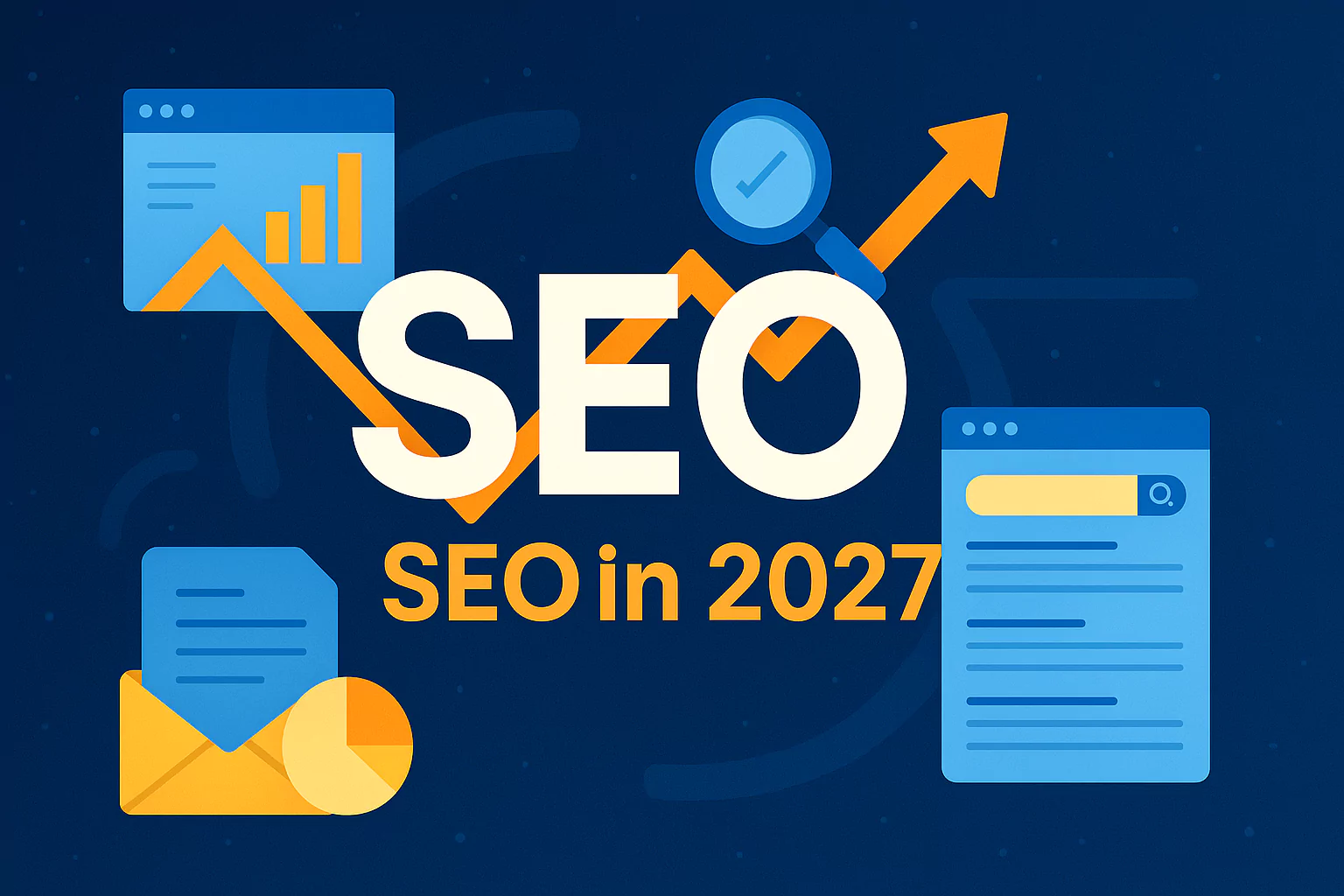
Search Engine Optimization (SEO) is evolving faster than ever. With Google integrating AI Overviews and large language models (LLMs) into search, the SEO landscape in 2027 looks very different from the keyword-driven strategies of the past. Instead of focusing only on backlinks and keyword density, the future of SEO is about trust, authenticity, and context.
In this article, we’ll explore how SEO in 2027 works, what ranking factors matter most, and how you can future-proof your website to stay ahead of Google’s updates.
Why SEO in 2027 Is Different
By 2027, SEO isn’t about tricking algorithms. Google and other search engines use AI-driven ranking systems that:
- Summarize answers with AI Overviews
- Evaluate websites using entity-based authority
- Prioritize human-verified trust signals
- Reward structured, high-value content
This means strategies that worked in 2020 may no longer be enough.
The Role of Google’s AI Overview
Google’s AI Overview delivers quick summaries at the top of search results. This is both a challenge and an opportunity.
- Challenge: Fewer organic clicks because users get answers instantly.
- Opportunity: If your content is cited in the AI Overview, you gain massive visibility and credibility.
👉 To be featured, your content must be clear, structured, and fact-checked with schema markup. Google’s AI Overview feature is transforming how answers are shown to users.
How LLMs Change SEO Rankings
Large language models (LLMs) don’t just read keywords — they understand context, semantics, and intent.
- They analyze entities (people, brands, organizations)
- They value author expertise & verified profiles
- They prioritize engagement metrics (time on page, shares, comments)
In short, SEO in 2027 is about writing for humans first, machines second. Many marketers are already experimenting with AI in digital marketing to draft content and analyze search intent.
Do Backlinks Still Matter in 2027?
Yes, but not as much as before. Traditional link building has been replaced by:
| Ranking Factor (2020) | Ranking Factor (2027) |
|---|---|
| Backlinks from any site | Author authority & credibility |
| Keyword stuffing | Semantic optimization |
| Thin content with keywords | Deep, structured insights |
| Paid link schemes | User engagement signals |
Can AI-Generated Content Rank?
AI content is everywhere. But by 2027, Google can detect low-quality AI spam. To rank, AI-assisted content must be:
✅ Human-edited
✅ Fact-checked
✅ Original & valuable
✅ Supported with external citations
👉 Authenticity beats automation.
Biggest SEO Ranking Factor in 2027
The single most important factor is trust. Search engines ask:
- Who wrote this? (verified author profile)
- Is it accurate? (citations, fact-checking)
- Do people engage with it? (shares, time spent)
Websites that demonstrate E-E-A-T (Experience, Expertise, Authoritativeness, Trustworthiness) will dominate.
How Small Businesses Can Compete
You don’t need a huge budget to rank in 2027. Small businesses can:
- Target local SEO with AI-friendly structured data
- Build niche authority content
- Encourage real customer reviews & testimonials
- Get cited in Google’s AI Overview
Even a small blog can win if it’s authentic and specialized.
Will SEO Jobs Still Exist?
Yes — but with new skills. SEO professionals in 2027 focus on:
- LLM optimization
- Structured data & schema
- Content authenticity checks
- Brand authority building
Instead of chasing hacks, SEOs will become strategic trust builders.
Preparing Your Content for LLMs
If you want your website to thrive in 2027, follow these steps:
- Use schema markup for FAQs, articles, products, and reviews.
- Write in-depth, human-friendly content.
- Cite reliable sources.
- Create author profiles with credentials.
- Focus on long-term brand trust instead of short-term tricks.
Conclusion
SEO in 2027 is not about fighting algorithms — it’s about earning trust. Google’s AI Overview and LLM-powered search reward websites that provide authentic, structured, and authoritative content. Whether you’re a small business or a global brand, the key is simple: prove you’re real, credible, and valuable to your audience.
👉 Adapt today, and your website will stay future-proof tomorrow.
FAQs on SEO in 2027
1. What will SEO look like in 2027?
SEO in 2027 will prioritize trust, authenticity, and human signals over keyword stuffing. Google’s AI Overview and LLM-powered search will reward structured, authoritative, and engaging content.
2. How will Google’s AI Overview impact SEO in 2027?
Google’s AI Overview will summarize answers directly, reducing organic clicks. To stay visible, websites must optimize for AI citations, structured data, and expert-driven content.
3. What role will LLMs play in SEO rankings by 2027?
LLMs will analyze context, semantics, and entity authority. SEO will focus on making content LLM-friendly with schema markup, semantic optimization, and verified expertise.
4. Will backlinks still matter for SEO in 2027?
Yes, but they’ll matter less than before. Engagement, author reputation, and entity-level trust signals will weigh more than raw backlinks.
5. Can AI-generated content rank in 2027?
Yes, if it is human-edited, fact-checked, and delivers unique value. Google will reward authenticity and penalize low-quality automation.
6. What is the biggest SEO ranking factor in 2027?
The biggest factor will be trust—measured by verified authorship, accurate information, and strong audience engagement.
7. How can small businesses compete in SEO in 2027?
By creating niche authority content, optimizing for LLMs, building local trust signals, and targeting AI Overview citations.
8. Will SEO jobs still exist in 2027?
Yes, SEO jobs will exist but evolve. SEO professionals will focus on LLM optimization, schema, AI overview strategies, and brand authority building.
9. How should creators prepare their content for LLMs and Google AI Overview?
Creators should use schema markup, FAQs, cite credible sources, and build digital authority so their content gets picked up by AI Overview and other LLM search engines.
10. Is SEO in 2027 more about trust and authenticity than keywords?
Absolutely. Verified author profiles, transparent sources, and user engagement will matter far more than keyword density.
Reference Links (authoritative sources)
- Google Search Central Blog → https://developers.google.com/search/blog
- Search Engine Journal – SEO Trends → https://www.searchenginejournal.com/
- Moz SEO Insights → https://moz.com/blog