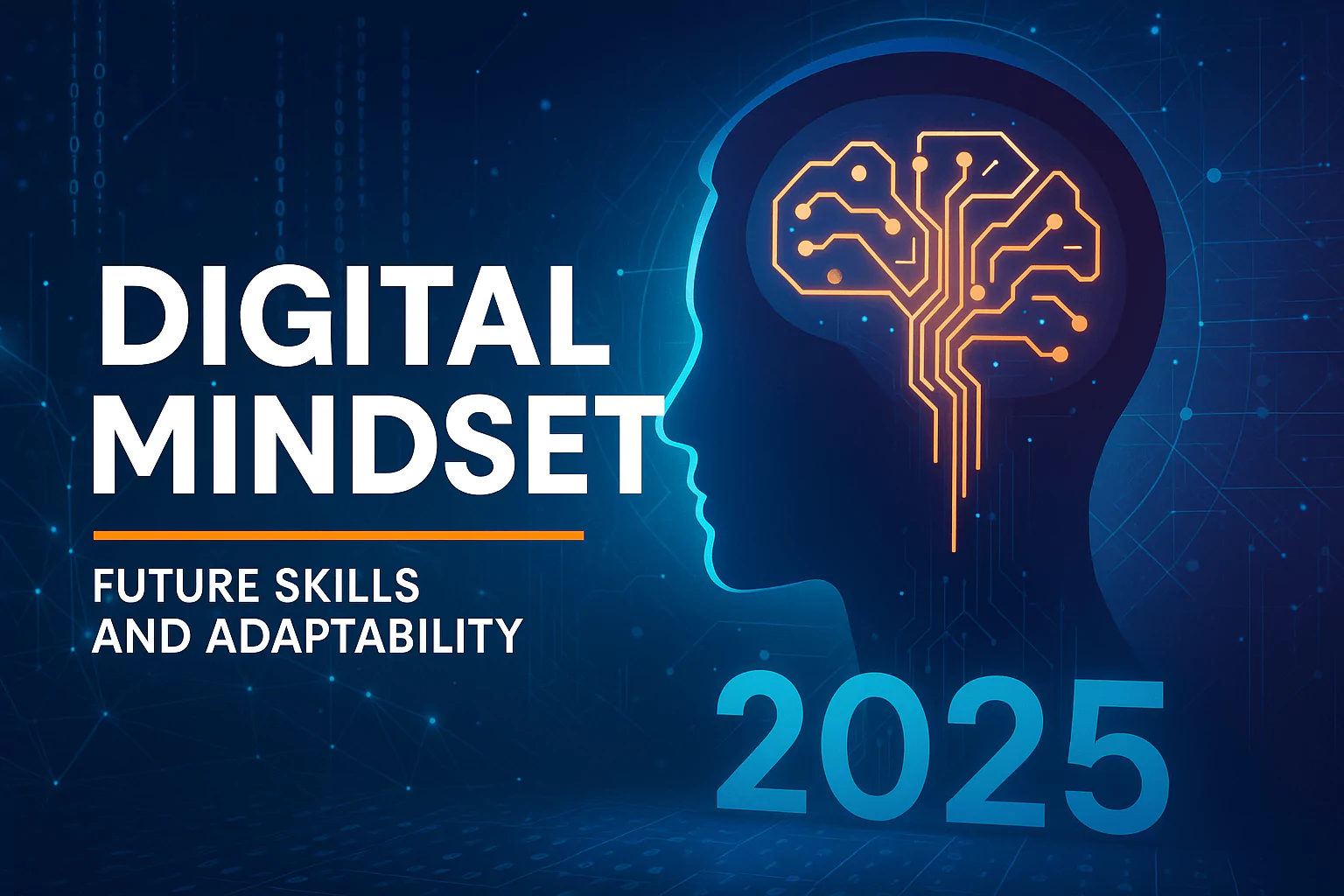






The Digital Mindset is no longer about convenience—it’s about survival and growth. As we step into 2026, the world is experiencing unprecedented technological shifts:
- Artificial Intelligence is reshaping industries.
- Web3 and blockchain are redefining trust and ownership.
- Virtual Reality (VR) and the metaverse are transforming workplaces.
- Cybersecurity threats are escalating in complexity.
In this landscape, a digital mindset is not optional—it’s essential. Whether you’re a student, entrepreneur, or professional, your ability to think, act, and adapt digitally will define your success.
This long-form guide explores 7 powerful strategies to build a digital mindset in 2026, with case studies, tools, and step-by-step tips you can apply immediately.
What is a Digital Mindset in 2026?
A digital mindset is the ability to embrace change, adapt to emerging technologies, and leverage digital tools to create value. It goes beyond technical skills—it’s a way of thinking that shapes how you approach problems, opportunities, and learning.
Key traits of a digital mindset in 2026:
- Openness to Change → Accepting AI and automation as part of life.
- Agility → Quickly adapting to new platforms, tools, and roles.
- Data-Driven Thinking → Making informed decisions with analytics.
- Lifelong Learning → Staying curious and updated.
- Security Awareness → Treating cybersecurity as a daily habit.
👉 For example, in 2025, generative AI tools like ChatGPT transformed industries. By 2026, professionals who embraced them are now leading innovation—while those resistant to change are struggling.
1. Embrace Continuous Learning
In 2026, learning is personalized, on-demand, and AI-assisted. Traditional education alone cannot keep up with digital acceleration.
Why Continuous Learning Matters
- New technologies emerge every quarter.
- Job skills have a half-life of 3–5 years.
- Businesses prefer employees who can learn, unlearn, and relearn quickly.
Best Platforms to Explore
- Coursera – Professional certifications.
- edX – University-backed courses.
- LinkedIn Learning – Skills for careers.
- YouTube – Free tutorials, but be selective.
How to Build a Learning Routine
- Dedicate 30 minutes daily to learning.
- Set a weekly goal (new app, new concept, new skill).
- Join online communities (Discord, Reddit, LinkedIn).
- Track your progress in Notion or Trello.
📌 Case Study:
A project manager in 2025 invested 5 hours weekly in learning AI-powered productivity tools. Within 6 months, she cut project delays by 22% and earned recognition at her company.
2. Adopt a Growth Mindset in the Digital Era
Psychologist Carol Dweck introduced the idea of a growth mindset: believing skills can be developed through effort and learning. In 2026, this concept is non-negotiable in the digital world.
Fixed vs. Growth Mindset in Digital Era
| Mindset | Fixed | Growth |
|---|---|---|
| Technology | “I’m not good at tech.” | “I can learn step by step.” |
| AI Tools | “AI will take my job.” | “AI can help me work smarter.” |
| Failures | “I failed, so I quit.” | “I failed, so I’ll improve.” |
Overcoming Tech Fear
- Take micro-steps (learn one tool at a time).
- Surround yourself with tech-positive peers.
- Reframe problems as learning opportunities.
📌 Mini Case:
In 2025, teachers skeptical of AI fell behind. By 2026, educators with growth mindsets are using AI to deliver personalized lessons, making classrooms more inclusive.
3. Leverage Data in Everyday Decisions
By 2026, data is the new oil—but only if you know how to use it. A digital mindset means integrating data-driven thinking into daily life.
Personal Applications
- Track spending with Mint or YNAB.
- Use Google Fit to monitor health.
- Analyze study progress with apps like Notion.
Business Applications
- Optimize customer journeys with Google Analytics.
- Use Power BI or Tableau for visualization.
- Leverage CRM data for personalized marketing.
Gut Feel vs. Data Decisions
| Approach | Gut-Feel | Data-Driven |
|---|---|---|
| Marketing | “This campaign feels right.” | “Analytics show 30% higher engagement.” |
| Hiring | “They seem confident.” | “Data shows 80% project success rate.” |
| Health | “I think I’m fine.” | “Wearable shows low sleep quality.” |
📌 Startup Case:
A SaaS company in 2025 relied on gut instinct for marketing. After adopting a data-driven approach in 2026, customer sign-ups rose by 41% in just 3 months.
4. Improve Digital Communication
Global, hybrid, and remote work are now the norm in 2026. Digital communication skills are critical.
Skills to Master
- Clear, concise emails.
- Professional tone in chats.
- Effective use of Teams, Slack, Zoom.
- Respect for time zones & digital etiquette.
Writing Better Emails in 2026
- Subject line: short & descriptive.
- Body: clear, no jargon.
- Action items: bullet points.
- Sign off with clarity.
📌 Company Example:
A startup replaced 90% of meetings with async Slack updates and Loom videos. Result: 200+ hours saved annually and happier employees.
5. Experiment with Emerging Technologies
In 2026, those who experiment with technology stay ahead.
Key Tech to Explore
- AI Copilots (for coding, content, design).
- AR/VR Workspaces (virtual offices).
- Web3 Apps (decentralized identity, finance).
- Automation Tools (Zapier, Make, IFTTT).
Roadmap for Experimenting Safely
- Set aside 1 hour weekly for experimentation.
- Test free versions before investing.
- Join beta communities for early access.
- Share learnings with peers.
📌 Example:
An HR manager tested AI recruiting tools in 2025. By 2026, her company reduced hiring time by 40% and improved candidate satisfaction.
6. Practice Cybersecurity Awareness
With rising cyber threats, security-first thinking is a vital part of the 2026 digital mindset.
Daily Security Checklist
- Enable 2FA on all accounts.
- Use strong, unique passwords (via 1Password/Bitwarden).
- Update devices regularly.
- Recognize phishing & AI-generated scams.
📌 Case Study:
A mid-size business invested in employee cybersecurity training in 2025. In 2026, they avoided ransomware attacks that crippled competitors, saving millions in downtime.
7. Blend Human + Digital Skills
The future belongs to human + machine collaboration.
Hybrid Skill Examples
- Designers: AI for layout + human creativity.
- Marketers: AI for analytics + human storytelling.
- Teachers: AI for grading + human mentoring.
👉 In 2026, your human skills (creativity, empathy, leadership) will make you irreplaceable—even in an AI-driven world.
Did You Know?
- 💡 60% of jobs in 2026 demand advanced digital skills.
- 📱 By 2026, people spend 7+ hours daily in digital environments.
- 🚀 AI may add $20 trillion to the global economy by 2030, with adoption accelerating in 2026.
Frequently Asked Questions (FAQ)
1. What is a digital mindset in 2026?
It’s the ability to thrive in a tech-driven world by embracing AI, automation, and lifelong learning.
2. Why is a digital mindset important in 2026?
Because industries, careers, and education are now fully digital-first—adaptability is survival.
3. How can I start developing a digital mindset in 2026?
Begin with small steps: learn one tool monthly, read tech blogs, and experiment with AI assistants.
4. Who needs a digital mindset in 2026?
Everyone—students, professionals, entrepreneurs, and even educators.
5. What skills define a digital mindset?
Adaptability, data-driven decision-making, cybersecurity awareness, and growth mindset.
6. How does AI impact digital mindset in 2026?
AI amplifies human capabilities. Those with a digital mindset use it as a copilot, not a competitor.
7. How can businesses build a digital mindset?
Through training, encouraging experimentation, and creating a culture of innovation.
8. Can older generations develop a digital mindset?
Yes! Age is not a barrier. Curiosity and consistent practice are the keys.
9. What industries benefit most from a digital mindset?
Education, healthcare, finance, marketing, and IT—but truly, all industries are evolving digitally.
10. Is cybersecurity part of a digital mindset?
Absolutely. Digital literacy without security is incomplete.